Did you know that Bella’s website has a list showing which butterfly or moth the plants we sell are larval hosts to? Yes, it does! Depending on which device you’re using when visiting the website, look either on the right hand side or at the very bottom of the page to see “Plant Categories.” Then scroll down to “Host / Nectar Plant” to browse all the butterflies and moths you could be attracting to your garden. Click on the butterfly/moth name to see which plants feed it. Each plant description page also mentions which larvae that plant attracts.

Yes, planting to attract hungry caterpillars means you will see holes in the plants’ leaves. Sometimes the entire plant will be defoliated. We have to remember that the plants know that this is what’s going to happen, and they usually leaf back out with no problem. Yes, you might lose a plant every so often, but that’s a part of gardening with nature. What I do to protect very young/small plants is make a tent over them with shade cloth until they’ve grown enough to survive being eaten. Shade cloth comes in different levels of light filtering so be sure to get the right level for those sun-loving plants.

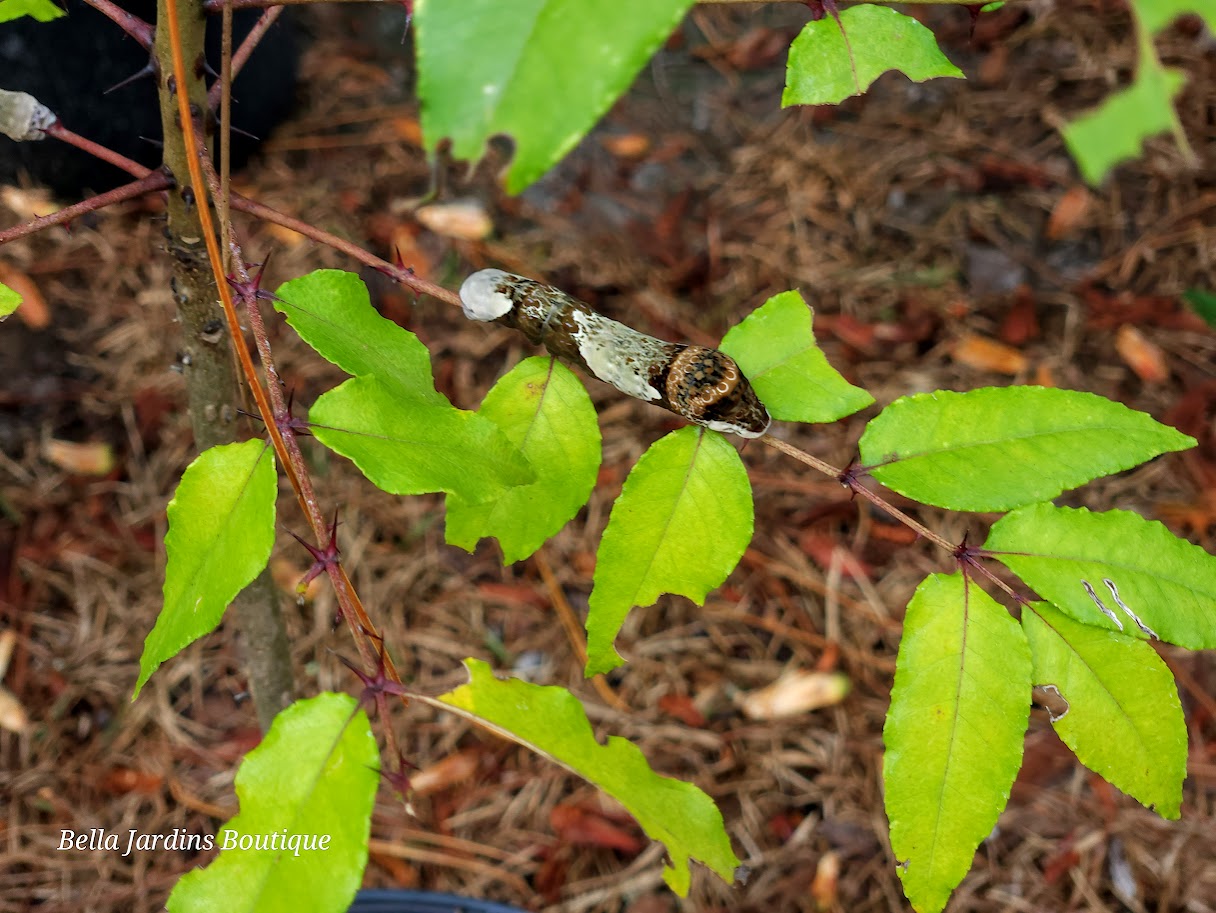
I don’t use any insecticide on the plants I sell with the exception of fire ant control. So, yep, sometimes you will get a plant that has holey leaves. The plant I have the hardest time keeping leafed out is the Hercules’ Club Tree, Zanthoxylum clava-herculis. Those beautiful Giant Swallowtail butterflies absolutely love laying their eggs on that tree. And the orange dog caterpillars love eating the leaves. The ones I had in stock last summer got eaten down two to three times. But, they kept leafing back out and looking gorgeous.

Scroll further down on the category list and you’ll see the “What Does It Attract” category. “Good Bugs” are bugs that are great for your Integrated Pest Management program because they eat the bad bugs. Ladybugs, dragonflies, praying mantis, assassin bugs, lacewings, and many others, are considered good bugs. “Pollinators” are all the other critters besides bees and butterflies that also pollinate plants, such as flies, beetles, bats, and wasps.

FYI, I don’t do extended research to confirm the butterflies/moths are found in Florida, so keep that in mind.

One of the main reasons we plant native is to ensure our native wildlife has the food they need to survive. So don’t worry about those holey leaves. Instead, know that you are gardening with nature. And that’s a very good thing.
Happy diggin’ in the dirt!
Jeanni and Ziva
Bella Jardins Boutique
Beautiful Gardens Begin Here


